
Most coaching teaches the perfect student.

Mine catches everyone who falls outside the box — which is almost everyone.

A syllabus tells you the ideal path. Real coaching starts the moment you fall off it: what went wrong, why your body did that, and what fixes it for you. That's the whole product.

I don't generalise. I've got a customised set of instructions for every type of flyer I've met in 14,000 jumps and 12,000 tunnel hours. Your body isn't the same as the bloke next to you, and your coaching shouldn't be either.
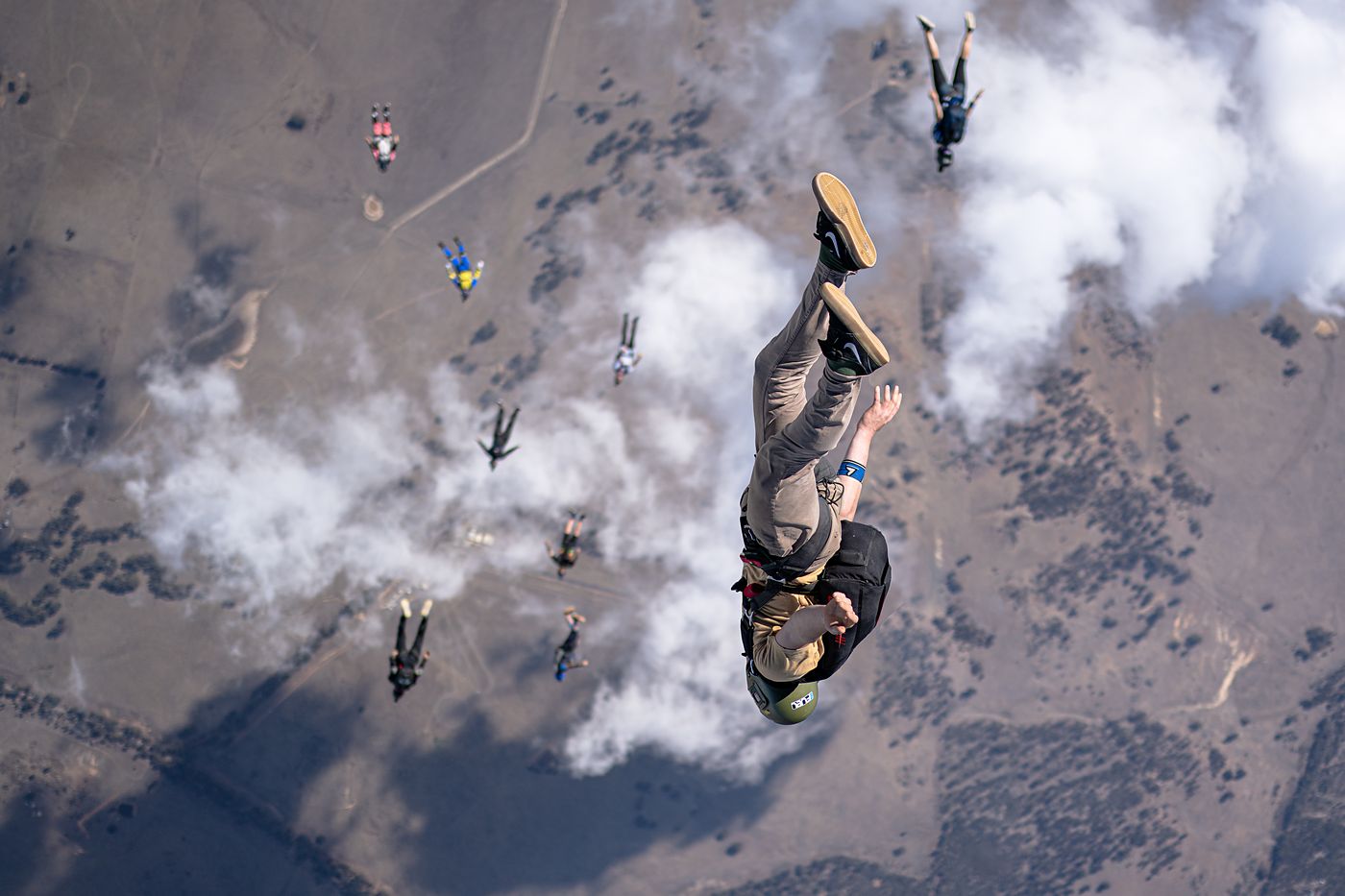
A skydiver dropping through a break in the cloud

You're learning a sense humans were never born with

Humans can't fly. What we do is learn to feel something invisible and push off it. That's not a sport skill — that's a sense you weren't born with, and it takes time to grow one.

Flying isn't walking, or cycling, or even swimming. In water you can see it and feel it. Air is invisible.

You're learning to read turbulence you can't see, push off something you can't touch, and feel pressure most people never notice their whole lives. It is a genuinely new human sense — and tunnels are the only reason it's now something a person can actually master in a lifetime.

The right thing feels wrong first

The position that's wrecking you feels comfortable. The one that fixes it feels wrong. Every flyer who's stuck is stuck on exactly that.

Backsliding feels comfortable, because it's just a position happening — no effort. So you try to stop it by adding force. It feels like it worked, because something stopped.

But you've just learned the wrong lesson: that force stops movement. It doesn't. You don't need force to stop force. You change the shape, and the movement stops on its own.

Which is why the correct position often feels worse than the wrong one for a while. If you bail out during that window — and most people do — you go back to the thing that was breaking you, because it felt better.

Force versus slippage

If you're working hard, you're doing it wrong. You're not pushing yourself through the sky — you're presenting a shape and letting the sky push you. Effort is the fault, not the fix.

Beginners try to propel themselves across the sky. The skill is presenting surface area and letting the air do the pushing. You don't drive it — you slip on it.

The sensation you're chasing is being moved, not moving.

Gears, not switches

Most flyers have two settings: off and everything. The range in between is where the actual flying is.

Beginners fly in stop/go. Full input or nothing. Mastery is knowing the whole range — gear one through five — and living in the middle of it.

Jumping straight to gear five is what causes the stall, and that wafting, floaty, out-of-control feeling you can't explain afterwards.

Tension isn't the enemy. Undifferentiated tension is.

“Just relax” is lazy coaching. Some parts of you need to be tight, at exact moments, for exact reasons. Knowing which, and when, is the whole skill.

It is not “relax and you'll fly”. Certain moments and certain parts of the body need tension. The fault is holding it everywhere, all the time, with no timing or intent behind it.

Mastery here is martial arts: knowing exactly where and when to apply it, and flowing between tension and release without having to think about it.

The words are chosen to stop you tensing up

Bad coaching doesn't just miss — it creates the next problem. Tell someone they can't do something and you've just built a fault into their head that wasn't there before.

The cue itself can cause the fault. Say “push your arms forward” and the word push subconsciously triggers tension — the exact thing you were trying to remove. So the language gets built deliberately.

And rather than telling someone what they did wrong, you ask a question that leads them to find it: did you feel that? They own the correction instead of receiving it.

I can see your injuries in your flying

I can usually tell where you've been injured by watching you fly. You're guarding it, the muscle won't release, and it's pulling everything else off balance. No YouTube tutorial is going to spot that.

You guard the spot that's hurt. The muscle won't release, so the tension sits there, and it pulls your whole body off balance. That is not a technique fault and it cannot be fixed with a position cue — the root cause is physical, not skill.

Same with habits, anatomy, and how you carry yourself on the ground. Straightening your legs through the heels versus pointing the toes are two different bodies and two different outcomes. Arms drawn back in front of the body versus behind it changes the rotator cuff, the shoulder rotation and the frame of the torso — same motion, different profile, different result.

That's how I think. It's worth something when it's pointed at you.

Everything above is free because none of it can be self-coached. Reading it won't make you fly better — having your flying read will.

Send me footage. Any footage: external camera, someone else's helmet cam, a phone through the glass. It doesn't need to be good, it needs to show what you're doing.